
How Order Picking Optimization Improves Load Fill Rates (and Reduces Costs)
According to recent market data, oil prices—particularly Brent crude—have experienced significant volatility, with spikes reaching over 70% during certain periods.
In a tense geopolitical context, especially with the crises in the Middle East in early 2026, this volatility is directly impacting logistics and industrial players.
👉 One reality is becoming clear:
energy and transportation costs can fluctuate dramatically within weeks, putting immediate pressure on operating margins.
In this context, improving logistics performance is no longer just a matter of optimization—it is a strategic necessity.
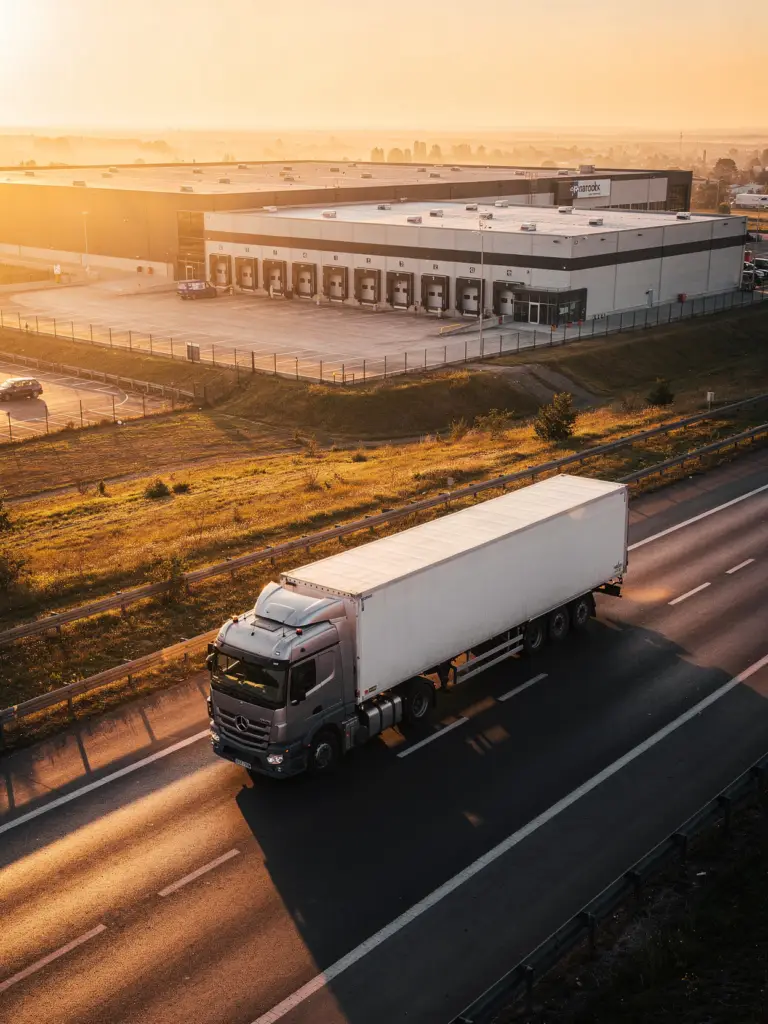
Fill Rate: A Key Yet Often Underestimated Lever
Fill rate is often associated with transportation. In reality, it is determined much earlier—at the heart of logistics operations.
👉👉 A +10% increase in fill rate can generate a -5% to -10% reduction in transport cost per unit (source: McKinsey & Company / Boston Consulting Group)
In other words, a half-empty truck costs almost as much as a full one—but does not create the same value.
In most cases, poor fill rates are not caused by transportation itself, but by upstream operational failures:
Operational causes:
- missing parcels
- incomplete pallets
- picking errors
- poorly synchronized flows
Immediate consequences:
- increased number of trips
- higher costs
- rising emissions
According to the European Environment Agency, freight transport represents a significant share of emissions in Europe, reinforcing the importance of optimizing every load.
Reducing Friction to Improve Speed and Reliability
Optimizing fill rate also means improving operational flow.
In many environments, picking and loading are still impacted by avoidable friction:
- repeated manual scans
- data re-entry or information loss
- lack of real-time visibility
- delayed data transmission
These inefficiencies slow down teams, generate errors, and degrade the final loading quality.
👉 By eliminating them, companies can simultaneously improve productivity and fill rate.
It All Starts with Controlled Order Preparation
Sustainably improving fill rate requires securing order preparation at the source.
With data-driven approaches—such as those offered by VERSA ABC ABM—operations teams can:
Understand performance gaps
Identify precisely where and why errors occur in the process.
Manage operations in real time
Access instant visibility to react before errors impact loading.Piloter l’activité en temps réel
Understand performance gaps
Identify precisely where and why errors occur in the process.
👉 The objective is simple: reduce errors before they impact loading.
Optimizing Every Step of the Logistics Chain
A strong fill rate relies on an unbroken chain. Every step must be controlled.
This includes:
Ensuring nothing is missed after picking
→ systematic parcel checks to guarantee flow completeness
Ensuring pallet integrity
→ detection of incomplete, inconsistent, or non-compliant pallets
Loading the right truck, at the right time
→ securing transport assignments and flows
👉 The goal is clear: avoid any degradation between preparation and shipment.
Fewer Errors, Fewer Disputes
A frequently underestimated impact of fill rate optimization concerns transport disputes.
Customers report that transport disputes can represent 1% to 3% of logistics revenue—which is significant.
By securing operations and providing proof (photos, timestamps), it becomes possible to:
Objectify discussions with carriers
Concrete evidence (photos, timestamps) supports every exchange and avoids disputes.
Reduce claims
Less ambiguity in exchanges means fewer disputes and hidden costs.
Accelerate resolution times
Cases are handled faster thanks to reliable, time-stamped data.
👉 Result: fewer hidden costs and significant operational time savings.
A Concrete and Measurable ESG Lever
Optimizing fill rate is not only an economic challenge.
It is also a direct environmental lever:
- Fewer unnecessary trips
Each optimized load avoids an additional trip and reduces pressure on infrastructure.
- Reduced CO₂ emissions
Freight transport represents around 25% of transport emissions in Europe (European Environment Agency).
- Improved energy efficiency
Organizations such as ADEME identify flow optimization as a priority action to reduce energy consumption.
In the End...
And operational efficiency as a strategic lever relies on:
- better preparation
- better control
- better loading
Because ultimately, operational efficiency is not just about performance gains.
👉 It is a direct lever for profitability, quality, and sustainability.
And in a context of increasing pressure on costs and the environment,
fill rate becomes a strategic indicator of competitiveness.